Welcome to Guest !
 
       IUP Publications
              (Since 1994)
Home About IUP Journals Books Archives Publication Ethics
     
  Subscriber Services   |   Feedback   |   Subscription Form
 
 
Login:
- - - - - - - - - - - - - - - - - -- - - - - - - - - - - -
-
   
- - - - - - - - - - - - - - - - - - - - - - - - - - - - - - -
 
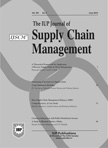
The IUP Journal of Supply Chain Management

Jun'16
Focus

The four papers included in this issue together offer theoretical and practical insight that adds great value to the research and practice in the area of supply chain management.

Articles
   
Price
(INR)
Buy
A Theoretical Framework for Application of Reverse Supply Chain in Waste Management
Positioning of Inventory in Supply Chain Using Simulation Modeling
How Supply Chain Management Enhances SMEs’ Competitiveness: A Case Study
Customer Satisfaction with Public Distribution System: A Study in Bhadrak District, Odisha
Select/Remove All    

A Theoretical Framework for Application of Reverse Supply Chain in Waste Management

--Hiremath Chetan V and S C Patil

The importance of Supply Chain Management (SCM) has increased over the years. This paper reviews the evolution of SCM. Since, SCM is still evolving as a discipline, there is sufficient scope to study the interrelationships between various stakeholders, stages etc. The inclusion of reverse flow of materials and information has become a necessity of modern-day SCM, giving rise to Reverse Supply Chain Management (RSCM). The scope of RSCM is wide. Municipal solid waste collection is a special case of RSCM. Reverse Logistics (RL) is of special interest as most of the challenges faced in RSCM are directly influencing it, and the overall performance of supply chain is in turn influenced by RL. In this paper, the authors propose a theoretical framework based on earlier studies in the area of SCM to further explore the relationships between various factors involved in waste collection system.

Article Price : Rs.50

Positioning of Inventory in Supply Chain Using Simulation Modeling

--B V Sai Suraj, Satyendra Kumar Sharma and Srikanta Routroy

Inventory costs are the major costs in production costs, so in order to gain global competitive advantage and to obtain a stable position in the market for one’s product, one needs to reduce the inventory in the entire supply chain rather than optimizing at a single location. This study focuses on reducing the inventory in a three-stage model with two echelon supply chain considering two identical retailers with one distribution center and one manufacturer. The study considered continuous review time in the inventory replenishment policies and also took single product into consideration. Arena is one of the most sophisticated simulation software available. In this model, simulation is performed using arena simulation for optimizing the inventory. Moreover it identifies the reorder point and reorder quantity in order to optimize the inventory at both the echelons in the supply chain.

Article Price : Rs.50

How Supply Chain Management Enhances SMEs’ Competitiveness: A Case Study

--Manaek Simamora, Syahrul Aiman and Bambang Subiyanto

Supply Chain Management (SCM) has been widely acknowledged as very important business strategy in the enhancement of competitiveness of enterprises. Many trends in SCM and its implications have been pointed out and a management platform has also been introduced by earlier writers. Considering various trend, implication and design of supply chain, a study on how SCM implemented in Small and Medium Enterprises (SMEs) in Indonesia which produce various coconut-based products was conducted. This paper briefly reviews some concepts in SCM. The aim is to update and disseminate some of the latest concepts. The SCM applied by an SME, namely PT. Tropica Nucifera Industry (PT.TNI), is also reviewed. Key to the success of PT.TNI is its ability to establish win/win and very strong collaboration with two main players in the supply chain, i.e., ‘many small suppliers’ and knowledge institutions. The company is adding knowledge institutions in their SCM, realizing the important role of the knowledge institutions in enhancing their collaboration with many small suppliers. This enables the company to create sustainable innovation at the grassroots level.

Article Price : Rs.50

Customer Satisfaction with Public Distribution System: A Study in Bhadrak District, Odisha

--Barada Prasanna Mohapatra and D K Mahalik

In the present competitive era, it has become a challenge for the marketer and the producer to satisfy the customers by providing them with the expected product or service features. It is also quite difficult to judge the customers’ mind to understand which product feature is satisfying them more. To reap competitive advantage, research is being done on customer satisfaction to find out which product feature will increase customer satisfaction or dissatisfaction. The study applies Kano model of customer satisfaction to understand the problem, satisfaction or dissatisfaction with the existing Public Distribution System (PDS). For this purpose, the study uses 10 factors to judge the impact on customer’s mind which leads to satisfaction or dissatisfaction with the PDS.

Article Price : Rs.50


Search
 

  www
  IUP

Search
- - - - - - - - - - - - - - - - - - - - - - - - - - - - - - -
 
- - - - - - - - - - - - - - - - - - - - - - - - - - - - - - -
 
- - - - - - - - - - - - - - - - - - - - - - - - - - - - - - -

Click here to upload your Article

- - - - - - - - - - - - - - - - - - - - - - - - - - - - - - -
Automated Teller Machines (ATMs): The Changing Face of Banking in India

Bank Management
Information and communication technology has changed the way in which banks provide services to its customers. These days the customers are able to perform their routine banking transactions without even entering the bank premises. ATM is one such development in recent years, which provides remote banking services all over the world, including India. This paper analyzes the development of this self-service banking in India based on the secondary data.

The Information and Communication Technology (ICT) is playing a very important role in the progress and advancement in almost all walks of life. The deregulated environment has provided an opportunity to restructure the means and methods of delivery of services in many areas, including the banking sector. The ICT has been a focused issue in the past two decades in Indian banking. In fact, ICTs are enabling the banks to change the way in which they are functioning. Improved customer service has become very important for the very survival and growth of banking sector in the reforms era. The technological advancements, deregulations, and intense competition due to the entry of private sector and foreign banks have altered the face of banking from one of mere intermediation to one of provider of quick, efficient and customer-friendly services. With the introduction and adoption of ICT in the banking sector, the customers are fast moving away from the traditional branch banking system to the convenient and comfort of virtual banking. The most important virtual banking services are phone banking, mobile banking, Internet banking and ATM banking. These electronic channels have enhanced the delivery of banking services accurately and efficiently to the customers. The ATMs are an important part of a bank’s alternative channel to reach the customers, to showcase products and services and to create brand awareness. This is reflected in the increase in the number of ATMs all over the world. ATM is one of the most widely used remote banking services all over the world, including India. This paper analyzes the growth of ATMs of different bank groups in India.
International Scenario

If ATMs are largely available over geographically dispersed areas, the benefit from using an ATM will increase as customers will be able to access their bank accounts from any geographic location. This would imply that the value of an ATM network increases with the number of available ATM locations, and the value of a bank network to a customer will be determined in part by the final network size of the banking system. The statistical information on the growth of branches and ATM network in select countries.

Indian Scenario

The financial services industry in India has witnessed a phenomenal growth, diversification and specialization since the initiation of financial sector reforms in 1991. Greater customer orientation is the only way to retain customer loyalty and withstand competition in the liberalized world. In a market-driven strategy of development, customer preference is of paramount importance in any economy. Gone are the days when customers used to come to the doorsteps of banks. Now the banks are required to chase the customers; only those banks which are customercentric and extremely focused on the needs of their clients can succeed in their business today.

more...

 
View Previous Issues
Supply Chain Management